Jun 20, 2023
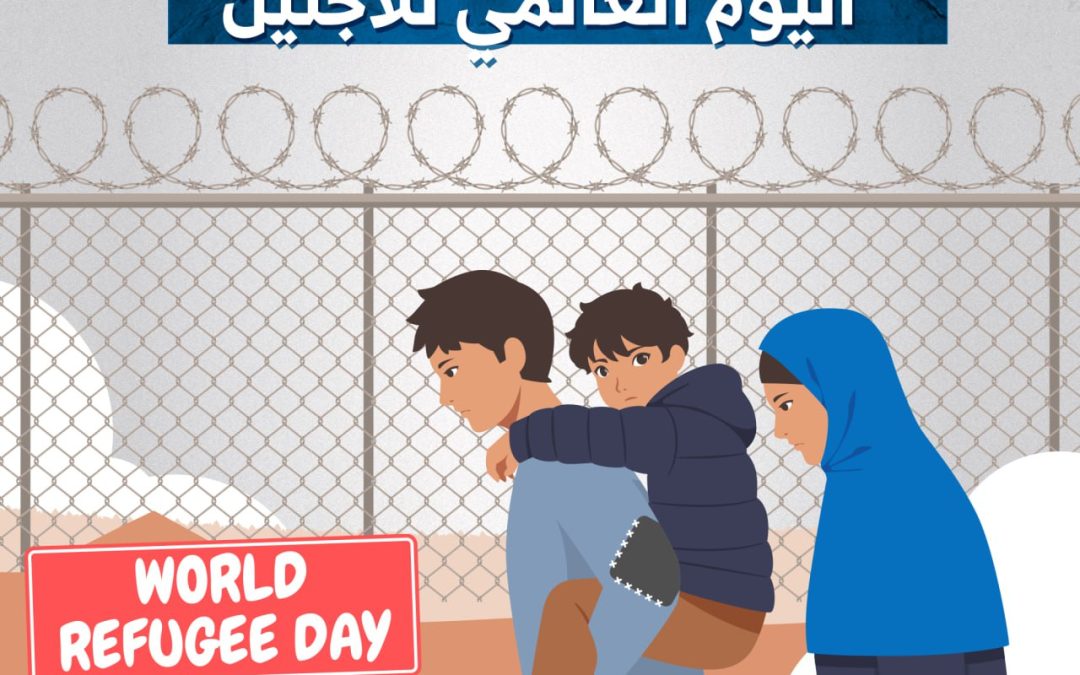
On World Refugee Day[1]
Libyan Authorities arbitrarily detain Hundreds of Refugees[2] and Asylum Seekers in Inhumane Conditions
Circumstances forced millions of people to leave their original homelands and flee in search of a safe place, to resume their lives anew, and in this perilous journey many of them lose their lives, and many of them are subjected to ill-treatment, humiliation, extortion and sexual violence. June 20 marks World Refugee Day to remind us of their suffering in the world in general and Libya in particular.
This day passes on refugees in Libya as one of the most painful days, where this year began with campaigns of arrests, arbitrary in their targets, shocking in their results. The security authorities in the east, west and south of the country launched arrest campaigns described as violent and undisciplined. The campaigns targeted a thousand refugees and asylum seekers, as well as migrants who entered through official border crossings, and children and women were not spared from those campaigns. International organizations and agencies, including the United Nations Support Mission in Libya (UNSMIL), condemned the campaign and called on the Libyan authorities to stop these measures and treat migrants with dignity and humanity in line with Libya’s international obligations. It also called on the Libyan authorities to grant United Nations agencies and international non-governmental organizations unhindered access to detainees who need urgent protection[3].
Libya has not ratified the 1951 Convention relating to the Status of Refugees[4], nor its 1967 Protocol, but it has joined the African Convention governing the different aspects of refugee problems in Africa[5], as well as many conventions on maritime rescue and the Convention on the Rights of the Child, which provide for the protection of asylum seekers and provide a safe place for them and connect them with the agencies that work to provide protection for them. Despite all these obligations, the Libyan legislator remained rigid in its place, as legislations were not amended, nor were any laws enacted that are consistent with those obligations. Libya still criminalizes illegal entry across borders into Libya, including refugees and asylum seekers[6], and they are detained and considered all “illegal” migrants.
According to estimates by the International Panel of Experts on Libya[7], established by Security Council resolution 1973 of 2011, there are 24 government detention centers in Libya for detaining migrants and asylum seekers. And according to estimates by the United Nations High Commissioner for Refugees (UNHCR), there are about 4,500 people detained in Libyan detention centers controlled by the Department for Combating Illegal Migration (DCIM), of whom 2,500 are of concern to UNHCR, and that the total number of refugees and asylum seekers in Libya is 42,559 individuals, who are scattered across various areas in Libya[8]. UNHCR is mostly unable to communicate directly with them, and many services are provided by phone or through local and international organizations that are partners of UNHCR.
Asylum seekers and refugees complain of the negligence of UNHCR staff in communicating with them and providing assistance to them. The Libyan authorities practice of obstructing UNHCR’s work is exacerbating the crisis of refugees and asylum seekers. UNHCR is not allowed to register asylum seekers in several areas, including eastern and southern Libya. This forces asylum seekers to travel to the capital Tripoli just for registration, which exposes them to risks on the way and harassment by outlaws, and sometimes detention because they do not have identification papers.
The situation of migrants and asylum seekers in Libya is always politicized on the one hand, and neglect on the other hand. The UNHCR and the countries that are supposed to be the first host are accused of not being serious in creating realistic and urgent solutions to get the stranded asylum seekers out of Libya and transfer them to countries, where they will be safer and protected.
World Refugee Day is a day designated by the United Nations to remind of the rights and obligations of asylum seekers and refugees, and to remind the world that the decision to seek asylum is not a choice, but a compulsion, due to compelling circumstances that required risking and requesting protection. Accordingly, the organizations signing this statement issued the following recommendations:
Libyan Authorities
- That the Ministry of Interior fulfils its legal obligations towards unaccompanied children, take all measures to separate them from adults, and facilitate the communication process of asylum seekers with the concerned organizations,
- That the Department for Combating Illegal Migration (DCIM) should train its staff, especially the guards guarding migrants and refugees in detention centers, and that they receive legal and human rights training to have the ability and competence to deal in professional ways that respect the privacy of children and women, and hire and train female staff to supervise the children and women sections in the detention center,
- It is important that Libyan organizations working on the care of children and women allocate a part of their activities to children and women detained in detention centers, and seek to launch programs and projects that help alleviate their suffering,
United Nations Mission and International Organizations Operating in Libya
- Build a joint and comprehensive advocacy strategy with the Libyan authorities, that is realistic and feasible to expedite the separation of children from adults at all stages of their presence in Libya, especially those who are unaccompanied, and there should be a clear action plan for international organizations and a division of tasks among them so that they have a positive impact on the stakeholders, the children,
- That the assessment of the United Nations Mission and agencies working in Libya on the file of irregular migration in Libya includes eastern Libya and sets a periodic comprehensive assessment for the entire geographical area in Libya. It should also pressure all parties to allow human rights monitors to visit all places of detention,
- That international organizations, including the International Organization for Migration and the United Nations High Commissioner for Refugees, pay attention to the hiring of their local staff in Libya, and that there is close follow-up on them in terms of raising their competence in relation to human rights and humanitarian aspects. It is important that part of their work includes receiving training and workshops related to human rights issues,
Refugees and Asylum Seekers:
- Respect the customs and traditions of the host society and understand the nature of the population, as this will ease the integration and provide a kind of protection for asylum seekers in Libya and migrants in general, and
- Avoid moving in places where the security situation is not safe, to avoid further violations of extortion or threats that endanger life and human dignity.
Tripoli – Libya
June 20, 2023
[1] On the fiftieth anniversary of the 1951 Convention relating to the Status of Refugees, which defines the basic concepts of international protection for refugees, the United Nations General Assembly, at its fifty-fifth session, decided to designate June 20 of each year as “World Refugee Day”, General Assembly resolution No. (A/RES/55/76) dated December 4, 2000.
[2] A refugee is someone who fled his or her home and country owing to “a well-founded fear of persecution because of his/her race, religion, nationality, membership in a particular social group, or political opinion”, according to the United Nations 1951 Refugee Convention. Many refugees are in exile to escape the effects of natural or human-made disasters.
[3] United Nations Support Mission in Libya (UNSMIL): “Statement on the arbitrary mass detention of migrants and asylum seekers that affected all parts of the country”, June 12, 2023.
[4] United Nations High Commissioner for Human Rights: “Convention relating to the Status of Refugees”, 1951.
[5] African Union: “OAU Convention Governing the Specific Aspects of Refugee Problems in Africa”, 1974
[6] Asylum seekers: Asylum seekers say they are refugees and have fled their homes as refugees do, but their claim to refugee status is not yet definitively evaluated in the country to which they fled.
[7] UN Security Council: “Final report of the Panel of Experts on Libya submitted in accordance with resolution 2571 (2021)”, May 27, 2022.
[8] UNHCR: “UNHCR Libya Update 06 June 2023”.
Jun 19, 2023
Sebha, June 13
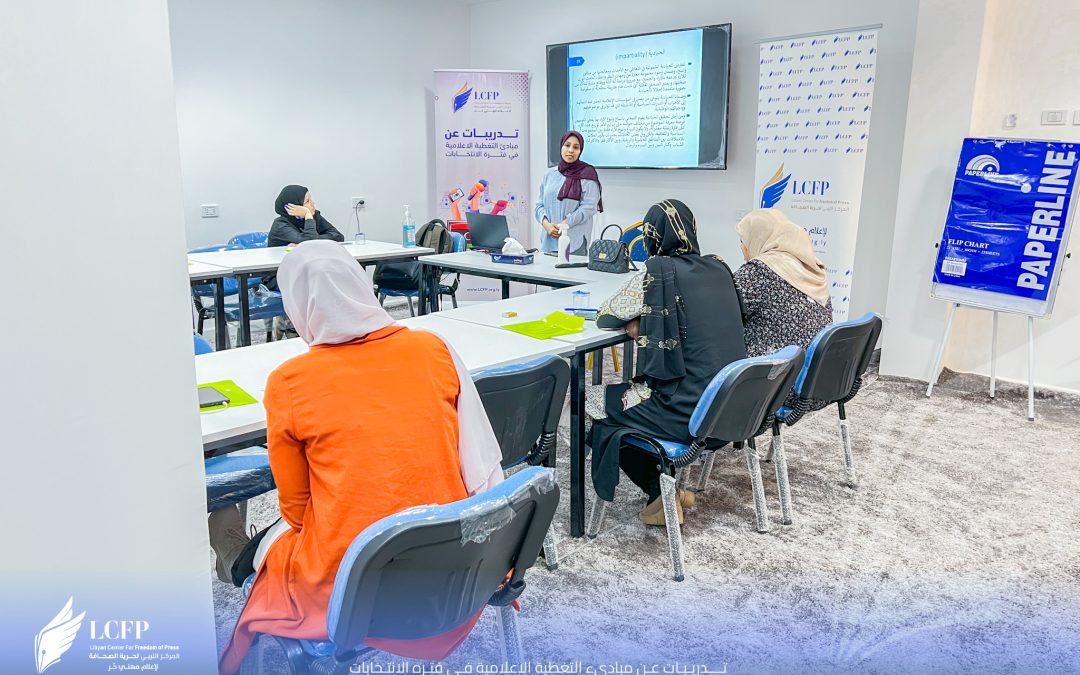
Journalists and activists participated in a workshop on the guidelines for media coverage of the national general elections on Saturday and Sunday in Sebha, with the participation of 12 journalists, activists and bloggers working in many media outlets
The workshop focused on how to collect and analyze information from electoral constituencies and polling stations. It also shed light on the role of journalist in monitoring and covering all aspects of the electoral process. The workshop was an opportunity to do simulations of drafting news reports related to the coverage of aspects of electoral campaigns and the polling day
The workshop also tackled the basic roles of media in the context of elections, how to prepare for press interviews, and how to conduct balanced coverage of all actors in the electoral process. Executive regulations and electoral laws related to the presidential and legislative elections were introduced to journalists in the workshop
Participants stressed the need to intensify awareness-raising and training campaigns for local journalists, to ensure access to information on all aspects of the electoral process and to activate the role of the Media Centre of the High National Electoral Commission
It is noteworthy that the workshop comes within the initiative of media coverage of the national elections with the aim of training about 140 Libyan journalists on professional rules for media coverage during the national elections

Mar 9, 2023
We, activists and members of civil society organisations working on ongoing human rights violations against migrants, asylum seekers and refugees in Libya, express our deep concern regarding the general climate of impunity and lack of accountability in the country. This volatile situation is further hampered by the shrinking of civic space, especially in light of through the criminalisation of activists and the crackdown on civil society organisations
Detention centres
In the last 6 years, since the Italy-Libya Memorandum of Understanding was signed, almost 185,000 people have been intercepted at sea by the so-called Libyan Coast Guard and brought back to detention centres in Libya. In these centres, which are at the hands of violent militias, they are at high risk of being subjected to mistreatments, forced labour, rape, torture and trafficking. A recent research carried out by Tilburg University concluded that at least 200,000 refugees (mostly from Eritrea) have been enslaved and trafficked in Libya between 2017-2021
The OHCHR Report Unsafe and Undignified: The forced expulsion of migrants from Libya, as well as the June 2022 report from the Independent Fact-Finding Mission on Libya, found evidence of war crimes and crimes against humanity in the specific case of migrants’ detention centres
Since 2021, some of the “official” detention facilities are being run by the Stabilisation Support Authority (SSA), which, according to Amnesty International, is a “a state-funded militia that operates with impunity” and who also intercepts migrants at sea
In its latest report dated 30 January 2023, the UN Fact-Finding Mission on Libya said that “arbitrary detention in Libya has become pervasive as a tool of political repression and control”, and that “Libyan authorities must take decisive steps to provide justice and redress to the vast number of victims suffering from long-standing violations of human rights and international humanitarian law”.
Externalisation policies, pullbacks and pushbacks
The EU and its Member States continue to further develop externalisation policies and try to contain migration by all possible means. They do so by equipping and supporting the so-called “Libyan Coast Guard”, who intercepted and returned 24,684 people to Libya in 2022, and almost 3,046 so far in 2023. Evidence shows how some of these interceptions are facilitated by Frontex through aircrafts and drones
The International Organisation for Migration reports that in the whole year 2022, 525 people died and 848 went missing in the Central Mediterranean route. These numbers are likely to be much higher due to the complete absence of information regarding many shipwrecks taking place along this route. As reported by Alarm Phone, pushbacks by merchant vessels are also common The situation at land borders is also extremely worrying: according to official statistics reported by OHCHR, “in 2019 and 2020, at least 7,500 migrants have been expelled from Libya’s external land borders”, most of them Egyptians, Sudanese and Chadians. More recently, forced returns have increased to Niger, Sudan and Chad. Also, boat departures of Egyptians from the East of Libya are on the rise: in 2022, Egyptians were the second nationality of migrants arriving in Italy (after Tunisians), while in 2021, more than 26,500 Egyptians were stopped at the Libyan border. The situation of asylum seekers and refugees inside Libya who are registered with the UN Refugee Agency, UNHCR, and are also victims of arbitrary detention and deportation, is very concerning as well, as is the lack of a legislative framework for the protection of migrant workers in the country. Hundreds of migrants are expelled by Libyan forces to get starved or kidnapped by ransom gangs. In January 2023, 600 migrants detained in Al Kufra facility controlled by the Department for Combating Illegal Immigration (DCIM) were expelled by the Libyan Arab Armed Forces (LAAF). This number included Sudanese asylum seekers registered at the UNHCR. Many are believed to have died in the desert and most went missing
At the same time, the European Union is committed to further “strengthen capacity of Libya to prevent irregular departures”, as stated in the Action Plan on the Central Mediterranean, and to disburse EUR 45 million to Libya and Tunisia to strengthen border management, including supporting Maritime Rescue Coordination Centres (MRCC) and the “training academy for border guards in Libya”. The EU is also committed to “explore ways to improve process to disembark migrants in Libya”, as stated in the 12-point MOCADEM Action file on Libya
Libya is not a safe place for disembarkation for migrants, and despite the numerous acknowledgements of this fact by UN bodies and the Council of Europe, and the many denunciations of agreements, the EU remains silent. On 6 February 2023, Italy handed over the first of the five announced patrol vessels to the Libyan Coast Guard (under EUTF budget), in the presence of European Neighbourhood and Enlargement Commissioner Várhelyi.
It is clear that the way the EU and some EU Member States collaborate with Libyan authorities in the field of migration is further hindering the stabilisation process in Libya. It also fosters a cycle of violence linked to interception and detention which strengthens local militias and human traffickers who are making money out of the lives of migrants, asylum seekers and refugees
We, the undersigned organisations, ask that
The EU and its Member States:
- Ensure that any agreements or cooperation between Libya and the EU and its Member States are consistent with international and EU Law.
- Esure transparency and disclosure of the monitoring and follow-up mechanisms adopted by EU to ensure the safety and security of migrants at sea, at disembarkation points and detention centers.
- Encourage and pressure Libyan authorities to open serious investigations into human rights violations and to implement the UN Fact Finding Mission’s recommendations
- Stop providing material and financial support to increase Libya’s capacity to intercept people at sea and/or land borders as it deteriorates the rights of migrants and refugees, increases pushbacks at sea and violence against them.
- Guarantee the transparency and accountability regarding the use of EU and Member States’ budget for border management projects in Libya.
- Focus Member States’ and the EU’s foreign policy on supporting the peace and stability process in Libya, and reduce the excessive focus on border management.
- Stress that Libya cannot be considered a Place of Safety for the disembarkation of migrants rescued at sea and put in place an EU Search and Rescue (SAR) operation in the Central Mediterranean; as well as to respect their duty of Search and Rescue.
- Reinforce safe and legal pathways for migration to the EU.
- Press Libyan authorities to fully respect the guarantees of the right to freedom of association, notably to:
- end the broad and systematic campaign of investigations and arbitrary arrest of bloggers, members of local civil society organizations (CSOs) and Libyan staff of international NGOs;
- allow Libyan CSOs to interact freely with UN agencies and international NGOs without prior security approval; cease all forms of reprisals against members of Libyan civil society for communicating with the international community about the human rights situation in the country;
- allow Libyan CSOs to visit detention facilities for migrants without prior approval from security bodies;
- freeze any decisions to suspend or dissolve Libyan CSOs without a prior judicial ruling; any such rulings must be issued in full respect for fair trial rights.
List of signatories
- Adala For All (AFA)
- Aman Against Discrimination(AAD)
- Belaady Organization for Human Rights
- Cairo Institute for Human Rights Studies (CIHRS)
- Defender Center for Human Rights
- EuroMed Rights
- Independent Organization for Human Rights
- Libya Al Mostakbal
- Libyan Center for Freedom of Press
- Libyan Crimes Watch
- Libyan Network for Legal Aid
- Refugees in Libya
- Un Ponte Per (UPP)
- World Organisation Against Torture (OMCT)
- Youth Gathering for Tawargha
Feb 25, 2023
Tripoli _ February 15
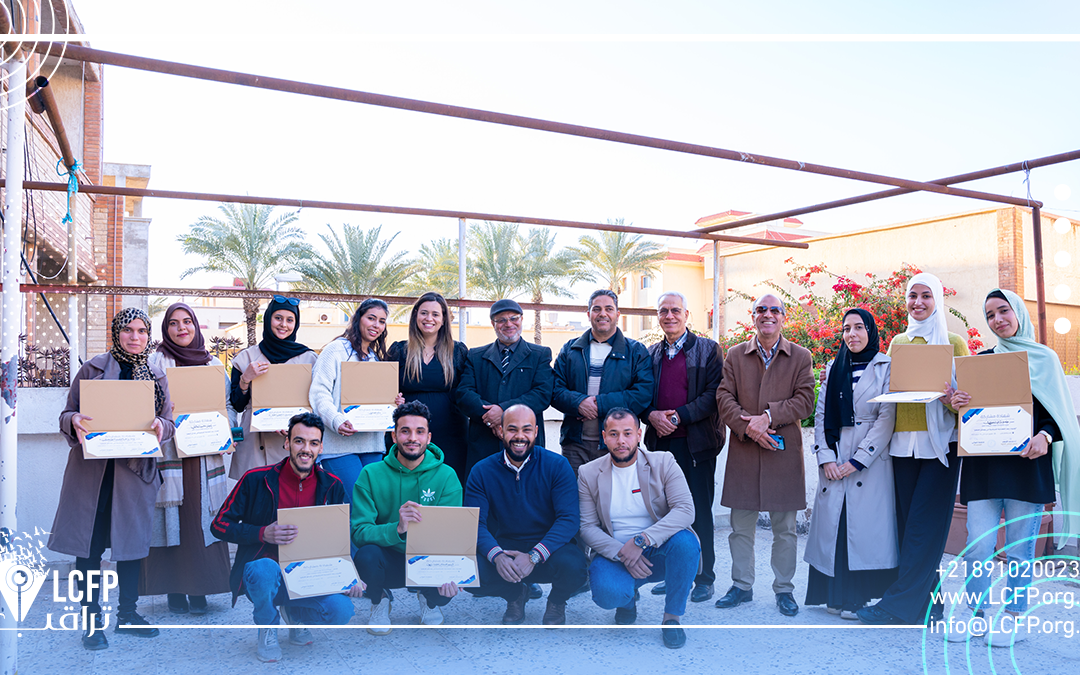
The LCFP team of monitors completed today, Wednesday, intensive training on media monitoring techniques for political pluralism in the Libyan media. The training lasted 15 days, with the participation of 9 trainees at the Center’s headquarters in Tripoli. The trainer was the expert and researcher in the field of media monitoring, Fatima Al-Lawati. The first outcome of the training will be the issuance of the first research report on political pluralism in Libyan media. It is in the framework of the structural and legal reform program for the press and media sector in Libya
The Chairman and members of the Board of Directors of the Libyan Center for Freedom of Press, and the Dean of the Faculty of Information at the University of Tripoli, Dr. Khaled Ghulam, participated in the distribution of training certificates to the trainees. The trainees will continue their work until the middle of next March, in order to monitor and analyze the content of 9 Libyan “state and private” media outlets. They will monitor 500 TV hours
Prof. Dr. Mohamed Al-Asfar, Chairman of LCFP Board of Directors, said that these trainings are the first step towards more media research on how to analyse the content, assess the appearance of political figures in Libyan media and evaluate the respect of equal opportunities among all Libyan parties. That is the basis for ensuring fair representation for all through media funded by the state or by private entities
It is noteworthy that media monitoring comes within the project of media coverage of the elections in the context of sensitive situations. The Project is part of the LCFP preparations for the upcoming national elections. The Project’s outcome is the issuance of the first research report on political pluralism in Libyan media
Jan 5, 2023
Brief Annual Report
Tripoli_ January 5th
2022 has been a quick year. We are on the verge of the new year 2023, and about to celebrate our tenth year at the Libyan Center for Freedom of Press. However, there are still many actions and missions that must be done to move forward along with a team that is betting on success and making impact. We work in an environment characterized by difficult challenges and increasing professional pressures on all of us, especially those working in Libyan civil society in the light of the fragility of the legal system and the increasing security risks and their complexity
Perhaps the most prominent feature of the past year is the significant shrinkage in the space for civil society work due to the arbitrary measures taken by the Commission of Civil Society in the east and west. 2022 has also witnessed our resilience and steadfast rejection of many decisions of the Government of National Unity. The GNU describes those decisions as reformist while we consider them as selective and vindictive
During the year 2022, we focused on the internal development of our institution. We have endeavoured to modernize its policies and administrative and executive structure. We have also focussed on fine-tuning our vision in supporting freedom of expression, conducting real and radical reforms to strengthen the independence of the Libyan press and the media sector. We have been pushing forward to promote the economic and social rights of journalists who continue to face exceptional critical circumstances that impose strict censorship on their work
Our ongoing efforts to combat hate speech and disinformation, which have been launched since 2017, may still find wide national interaction and resonance. These efforts have culminated in a painstaking and more professional work on Falso platform to monitor hate speech and fake news.
2022 was a year filled with discussions, orientation sessions, and round tables of dialogue that targeted several segments of Libyan society, such as academics, human rights defenders, judges, prosecutors, lawyers, leaders of political parties, and candidates for the stalled presidential and parliamentary elections along with journalists and fact-checkers. It all aimed at drawing the features of national vision to serve as the basis of a new national legislation that sets the path for a new era for media related freedoms and creates a break with the vulsive guided media discourse and the state of fragmentation
We believe that open dialogue on a common ground has enabled us to have live and direct discussions with 250 Libyans from several segments of the Libyan society, in 8 major Libyan cities
Many of the GNU decisions are efforts to control and orient the public and private media. Government Decision No. 811 of 2022 to regulate radio and television broadcasting best illustrates this as media lacks the most basic elements of “independence and pluralism”. The decision prompted us to go to the Administrative Department of the Court of Appeal to challenge the decision. Our Appeal is based on the illegality of the government’s decision as it contradicts with Libya’s obligations to international agreements and with the constitutional declaration in the country. Indeed, the government is trying to impose exorbitant fees without any services provided in a vindictive and selective manner of handling licensing and broadcasting
We have widened our training programs. We invested many years of training on physical and digital safety provided to more than 400 Libyan journalists, bloggers and activists. In addition, we have training our beneficiaries on journalism and human rights as we have trained more than 225 Libyan journalists in 5 Libyan cities. Now, we launched training programs on media coverage of the elections in the context of sensitive situations for 45 Libyan journalists so far. On the other hand, our media education and fact-checking programs target university students
Over the past year, our team has produced several visual and audio materials, press releases and statements, within the framework of expanding and involving the broad and general public in our work and programs. This helps us in terms of opening up and building a bridge for communication with the general public
Finally, 2022 remains the year of security risks within the context of fragility of the legal framework of our work and efforts, as well as the continuous professional pressure. Yet, we will inevitably overcome all obstacles
Mohamed Al-Najem
The Chief Executive Officer